

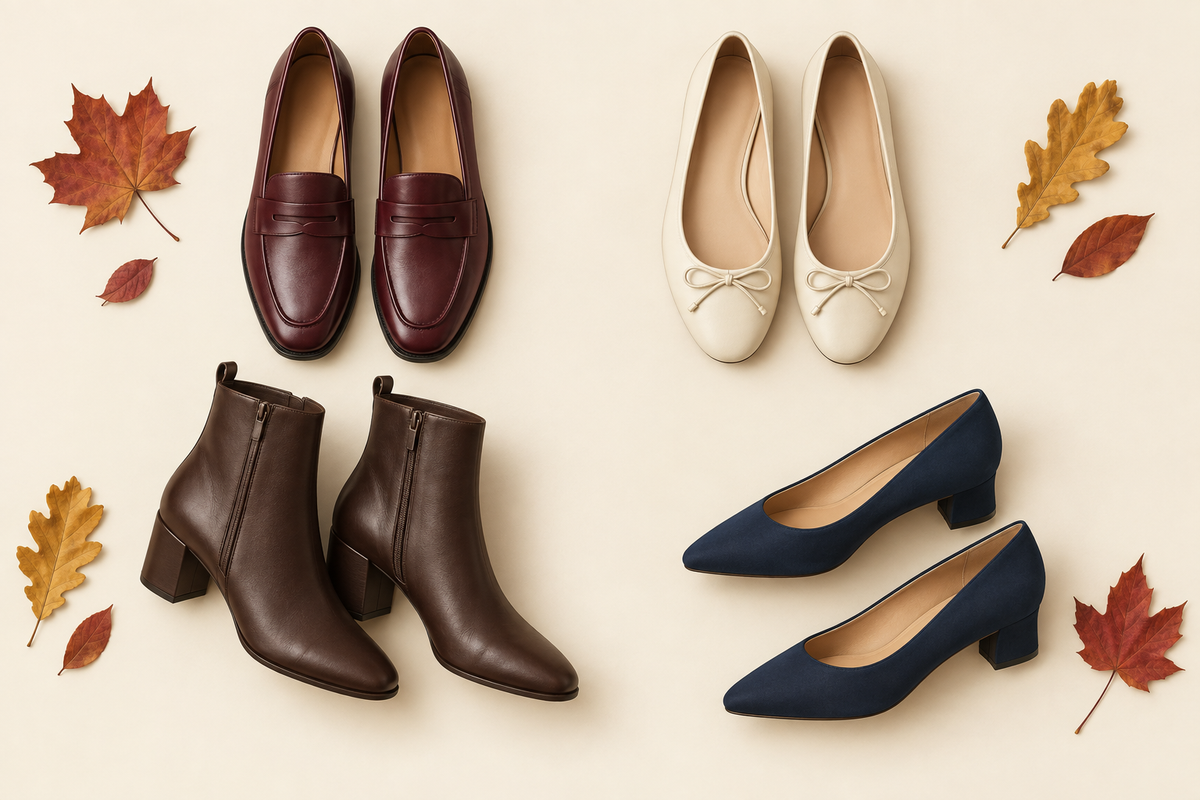
The right shoes for autumn workwear need to suit more than the outfit. Start with your workplace dress code, the amount of walking or standing you do, and the conditions on your commute. Loafers, flats, ankle boots, and pumps can each be useful options, but no style is automatically comfortable, office-appropriate, or weatherproof.
Before buying, try the shoes you already own with your usual work clothes. You may need a different combination rather than another pair.
Start with your working day
Check whether your workplace has rules about heel height, open footwear, or protective shoes. If your role requires safety footwear, those requirements take priority over styling suggestions.
Next, consider your journey. A short drive and a day at a desk create different needs from a long walk followed by hours on your feet. Where practical, separate commuting shoes from office shoes rather than expecting one pair to meet every need.
Compare four autumn office shoe options
Loafers
Try loafers with trousers, a skirt, or workplace-approved denim. Check that the heel stays secure when you walk and that the front of the shoe does not press on your toes. A structured appearance does not tell you how flexible or supportive a particular pair will feel.
Flats
Flats can work with dresses, skirts, and trousers where your dress code allows them. Assess fit, the feel of the sole, and any rubbing around the opening. A low heel is not a guarantee of comfort, and a pair that works for a brief outing may not suit a longer working day.
Ankle boots
Ankle boots are an option to consider for cooler days. Try the boot shaft with your actual trouser hem: does the fabric fall as you want, or catch on the boot? With a dress or skirt, check the complete outfit while standing and walking.
Do not assume an ankle boot is waterproof or slip-resistant. Look for explicit product information about weather protection and sole construction when those features matter.
Pumps
Pumps may suit more formal office outfits if you enjoy wearing them and they meet your workplace rules. Choose a heel height you can manage for your routine. Check whether your foot stays secure and whether pressure builds at the toes when you stand or walk.
If you expect to walk far, consider whether a separate commuting pair is practical. You do not need pumps simply because an outfit includes a blazer.
Try shoes with the complete outfit
Footwear can change where a trouser hem sits and how a skirt or dress looks in motion. Try the actual combination before a working morning, rather than evaluating shoes with unrelated clothes.
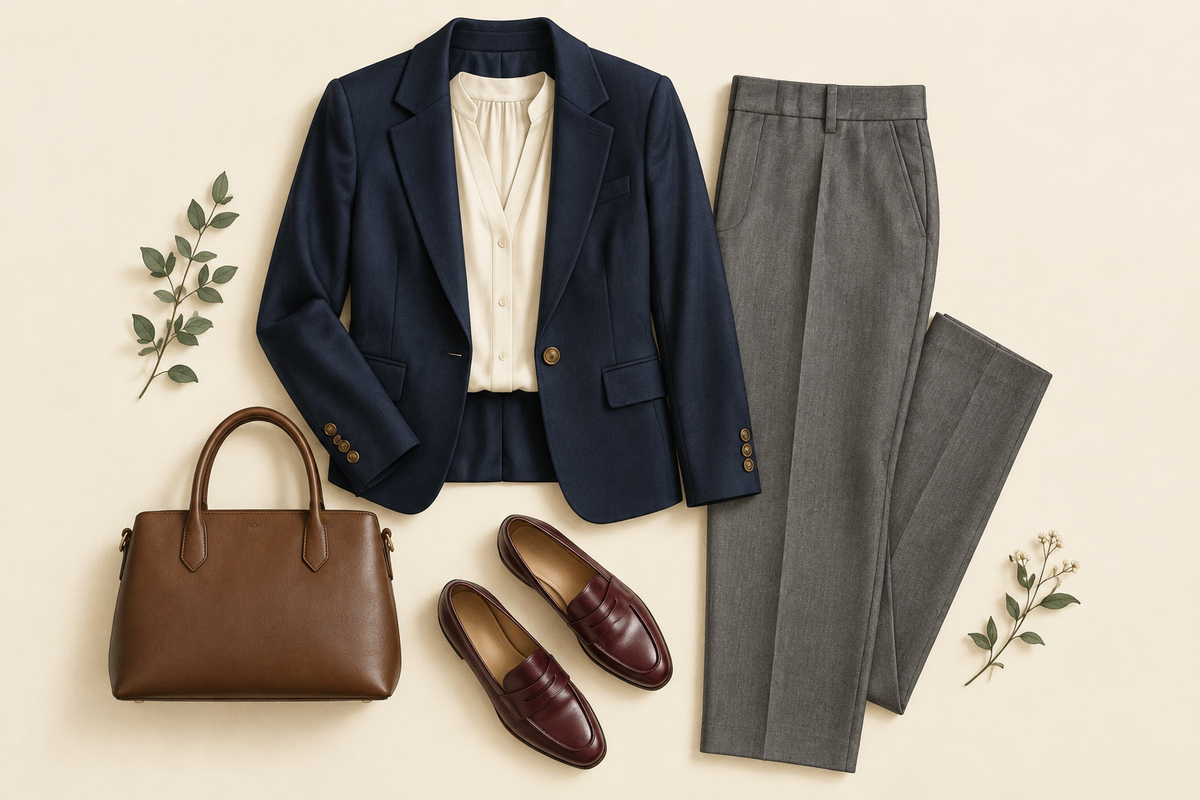
- Trousers and a blouse: Compare loafers and flats, checking the hem with each.
- Dress and jacket: Try flats, pumps, or ankle boots that suit your dress code and preferences.
- Approved denim and blazer: Compare loafers or ankle boots, without assuming the combination makes all jeans office-appropriate.
Use your existing palette as a guide. Brown, navy, black, cream, or burgundy may work with different wardrobes; you do not need a pair in every color. Prioritize a pair that completes several outfits you already wear.
Plan for wet or colder commutes
Choose commuting footwear for the conditions you expect. Review stated water resistance or waterproofing, materials, and care instructions rather than inferring performance from the shape or color of a shoe.
If you wear socks or tights with autumn shoes, include them when checking fit. A pair that fits one way with bare feet may feel different with your usual socks. Confirm that you can carry and store a second pair if you plan to change at work.
What to check when buying work shoes online
- Sizing guidance: Follow the product's measurement instructions and compare with your own measurements; do not rely only on the size you wear in another brand.
- Shape and fit information: Look for stated width or other fit details where available.
- Construction: Review the listed materials, heel height, closure, lining, and sole details that matter to you.
- Weather claims: Check for specific information if you need protection from rain or other conditions.
- Returns: Review the applicable return conditions before ordering, including any restrictions on trying shoes.
If an important detail is missing, ask before buying. Do not treat an image as proof of cushioning, support, weather protection, or long-day comfort.
Explore Moderne's Shoes collection to compare available options with this checklist. Use the individual listing information to decide whether a pair fits your needs.
Check fit before relying on a new pair
Follow the retailer's try-on conditions so you can assess the shoes without affecting return eligibility. Check for toe pressure, heel slipping, and rubbing while standing and walking. Do not assume painful shoes will necessarily become suitable after wear.
Use shoes you already know work for your routine when an important or demanding day is coming up. If you have persistent foot pain or individual support needs, seek advice from an appropriate healthcare professional rather than relying on a general style guide.
Questions about autumn work shoes
Are loafers or flats better for office wear?
Neither is universally better. Compare the specific pair's fit with your dress code, walking needs, and outfits. A style name alone does not establish comfort or support.
Can I wear ankle boots to a business-casual office?
That depends on your workplace rules and the particular boots. Check the dress code, then try them with your usual trousers, skirts, or dresses to assess the combination.
How many pairs do I need for an autumn workwear capsule?
There is no fixed number. Start with the pairs that cover your working days and commute. Add another only when you can identify a need your current shoes do not meet, such as a different dress requirement or weather condition.
Can office shoes also be commuting shoes?
Sometimes, if they suit your route, conditions, and comfort needs. If those requirements conflict with office expectations, changing shoes at work may be more practical.
Reading next
- How to Build an Autumn Workwear Capsule Wardrobe helps you coordinate shoes with the rest of your wardrobe.
- Business Casual Autumn Outfits offers outfit combinations to try with your chosen footwear.
The featured image is an illustration of shoe styles, not a photograph of specific Moderne products.


Leave a comment
This site is protected by hCaptcha and the hCaptcha Privacy Policy and Terms of Service apply.